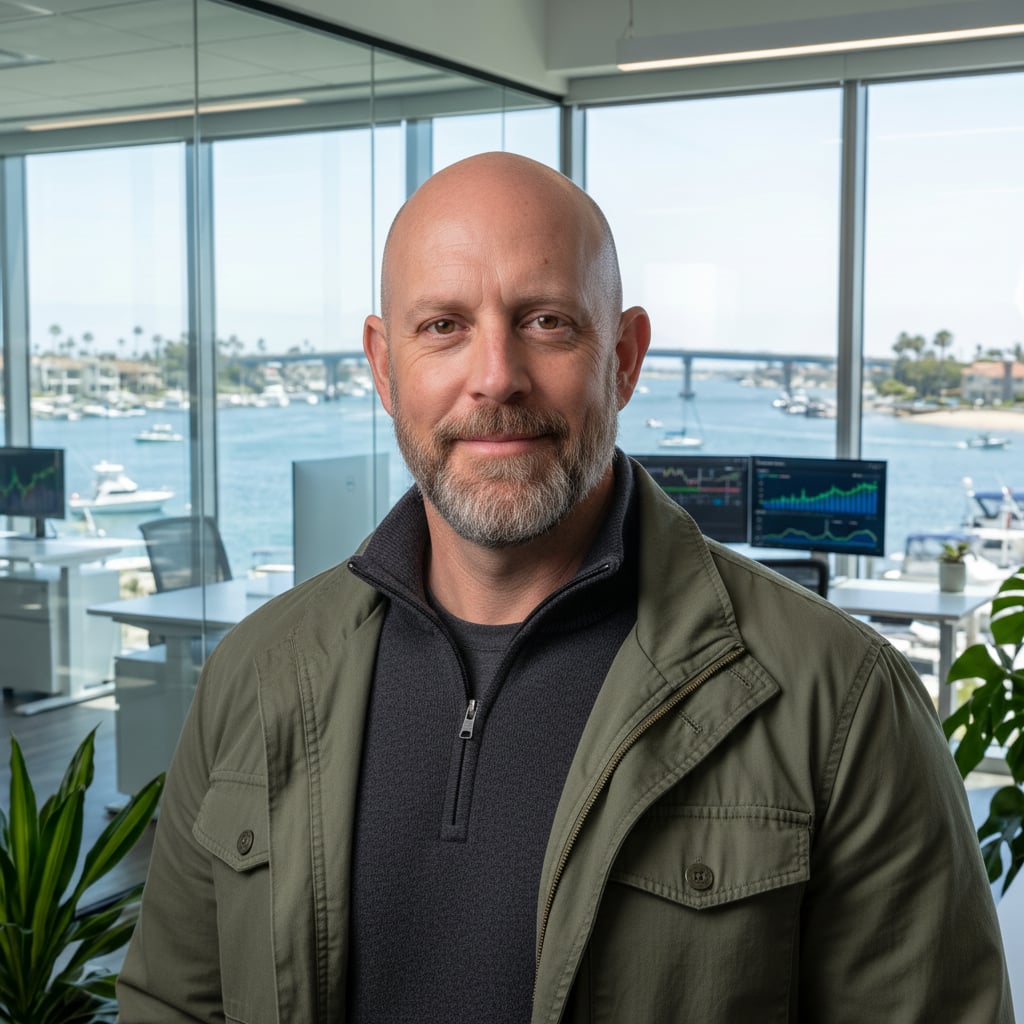
Some Sundays I'm out on the water with my phone face-down while the operating cadence runs without me. The pressing-items sweep runs, inbound messages get sorted, and the Friday KPI review is already set to arrive in my email. I'm not bragging. I bring it up because it changed how I see my job. A COO turns strategy into repeatable execution, and most of what slows execution down isn't hard decisions. It's coordination, follow-up and admin.
I don't need more people chasing status. I need more of the work to run itself, to a standard. That's my case for digital teammates, and it's why I think the COO should own them, not IT.
Execution friction grows faster than the team
Every operator knows this pattern. The systems are already in place: CRM, project tracker, email, calendar, shared drives. Moving work between them is still manual. Someone has to notice the dropped thread, chase the approval, write up the meeting and remind three people what they agreed to.
Hiring doesn't solve it. Each new hire adds coordination load along with capacity: more handoffs, more status updates, more meetings to align the people you hired to do the work. As a company grows, coordination overhead compounds faster than headcount does.
Most "AI assistants" quietly make this worse. They hand you one more inbox. You have to prompt them, give them context and check what they produce. The work doesn't leave your plate. It just changes shape.
So leaders spend their best hours on low-leverage work, and the board still expects more output from the same resources.
An assistant waits for prompts. A teammate owns a role.
Most of the market blurs this distinction, and it's the one that matters.
| Assistant | Teammate | |
|---|---|---|
| How work starts | Waits for a prompt | Owns a role and a schedule |
| Context | Starts from zero each time | Draws on scoped knowledge and memory |
| Where it works | In its own window | Inside your existing systems and channels |
| What you get | A draft to check | A closed loop, with review points |
At Clone, the model is simple: Persona + Knowledge + Skills = a clone. The persona defines the role, how the clone works and where its limits are. Knowledge gives it the context of your business, scoped to the organization, department, role or individual. Skills let it take real actions, like preparing for a meeting, updating a record or sending a brief.
"Teammate" is an operating metaphor. It doesn't mean the AI is human or that it should run without limits. A trustworthy AI teammate has a bounded job, appropriate access, review points and an agreed definition of quality. A human hire needs the same four things to succeed.
What to delegate first
I sort delegation by two questions: how often does the work happen, and how much judgment does it take?
High frequency, low judgment. Start here: meeting prep and recaps, morning briefs, pressing-items sweeps and CRM hygiene. In our own stack, Meeting Command reviews the calendar, email, Salesforce and the knowledge base to build prep before each meeting. Meeting Analytics summarizes the meeting afterward and pulls out the action items. Morning Brief builds a daily operating brief from your calendar, email and connected systems, including open loops and follow-ups. Pressing Items answers one question: "What needs my attention right now?" It sweeps the last 12 hours of email, calendar, files, CRM and ticketing, then ranks what it finds: overdue items, escalations, decisions others are waiting on and dropped threads.
High frequency, medium judgment. Next come research briefs, first drafts, lead lists and support triage. The clone does the assembly, and a person still reviews the result.
Keep human. Final calls, relationships, ethics and strategy stay with people. I don't think of this as a limit we're waiting for the technology to outgrow. Freeing people for this work is the reason to do any of this.
How we run Clone on clones
We run our own company this way, and we're building it in public.

Here's the cadence we've set up. Quinn Sinclair, our marketing clone, produces the daily hero-asset brief at 5:00 a.m. Night King, our process-enforcer clone, runs a pre-publish compliance check at 6:30 a.m. covering claims, disclosure and rate limits. Then a human gets a review window for final brand approval before anything posts. Outreach batches need approval before they go out. Graham Chambers, our support clone, sweeps the inbox at 10 a.m. and 4 p.m. and handles comments, DMs and FAQ answers. JR Rimbo, our operations clone, owns the KPI dashboard and emails me the Friday performance review at 3 p.m.
One workflow shows the before and after. Most leadership meetings used to end with everyone agreeing that someone would send notes. Sometimes that happened, often late, and the action items lived in one person's memory. Now Meeting Analytics extracts the action items, the To-Do skill turns them into tracked tasks, and Pressing Items folds them into the next priority sweep. Each meeting report is saved to the knowledge base, so the clones can draw on what we decided last week.
A clone can also join the meeting itself. When it does, it follows the people in the room. It doesn't take over the agenda, invent facts or make binding commitments.
I'm leaving out percentages on purpose. When we publish numbers, they'll be verified internal metrics. Until then, the proof is that the cadence runs.
Trust is the prerequisite
Digital teammates earn trust the same way people do, through clear scope, reliable output and transparency about what they did. You wouldn't give a new hire a master key on day one, and an AI teammate shouldn't get one either.
The basics of governance aren't complicated, but none of them is optional:
- Role-based access, so each clone can do only what its role allows.
- Knowledge boundaries, so shared intelligence doesn't turn into shared private memory.
- Human approval on external actions, especially anything that reaches a customer or the public.
- An audit trail, so you can review access changes and see where a person stepped in.
Good skills fail safe. Meeting Analytics is a small example. If it can't confidently match the notes to a single calendar event, it sends nothing rather than risk emailing the wrong people, and it never sends the same meeting's recap twice. Pressing Items prepares its briefing but sends nothing until you confirm the channel and recipients.
There's a fair counterargument. All of this takes more setup than giving a model everything and hoping good judgment emerges, and it looks less magical in a first demo. I'll take that trade: more setup, fewer surprises. I've made the founder mistake myself of prompting over and over because it feels faster than setting expectations. Vague inputs invite variable outputs. Being clear up front about the role, inputs, standards, guardrails and handoff is what makes the work consistent.

I went to the Air Force Academy and played Division I football. Both taught me that most important work is repetition no one celebrates, done to a standard.
Standards don't drop because the teammate is digital.
A 30-day playbook for COOs
- Week 1: Map your recurring workflows. Pick three that happen often and take little judgment.
- Week 2: Deploy one clone with the right knowledge and skills, and have a person approve every output.
- Week 3: Measure time saved and error rate, then tighten the instructions wherever the output drifted.
- Week 4: Expand to a second role and set the operating cadence: fixed times, owners and review windows.
The advantage is multiplication
Over the next few years, the operating advantage won't come from replacing people. It will come from multiplying what your best people can do. That means giving coordination, follow-up and admin to teammates that work inside your systems, close loops and show their work.
That's the job I signed up for as a COO: build systems that free people for the work only people can do.
If you want to see how we run our own cadence, book a demo, or start free at clone.org.